


Understanding the Journey of Farm-Sourced Meat to Your Table
- Farmhill Lane Co.

- May 6, 2025
- 4 min read
Updated: May 21, 2025
When you sit down for a meal featuring meat, have you ever thought about the journey that piece of beef has taken to reach your plate? The path from farm to table is intricate and involves numerous steps that prioritize quality, safety, and sustainability. In this post, we will explore this fascinating journey, shedding light on what it means to eat farm-sourced meat.
What is Farm-Sourced Meat?
Farm-sourced meat refers to products that come directly from farms, emphasizing the importance of local agriculture. Unlike mass-produced meat imported from far-off states or countries, farm-sourced meat often features higher quality and humane practices. It covers various types of meat, including beef, pork, poultry, and lamb.
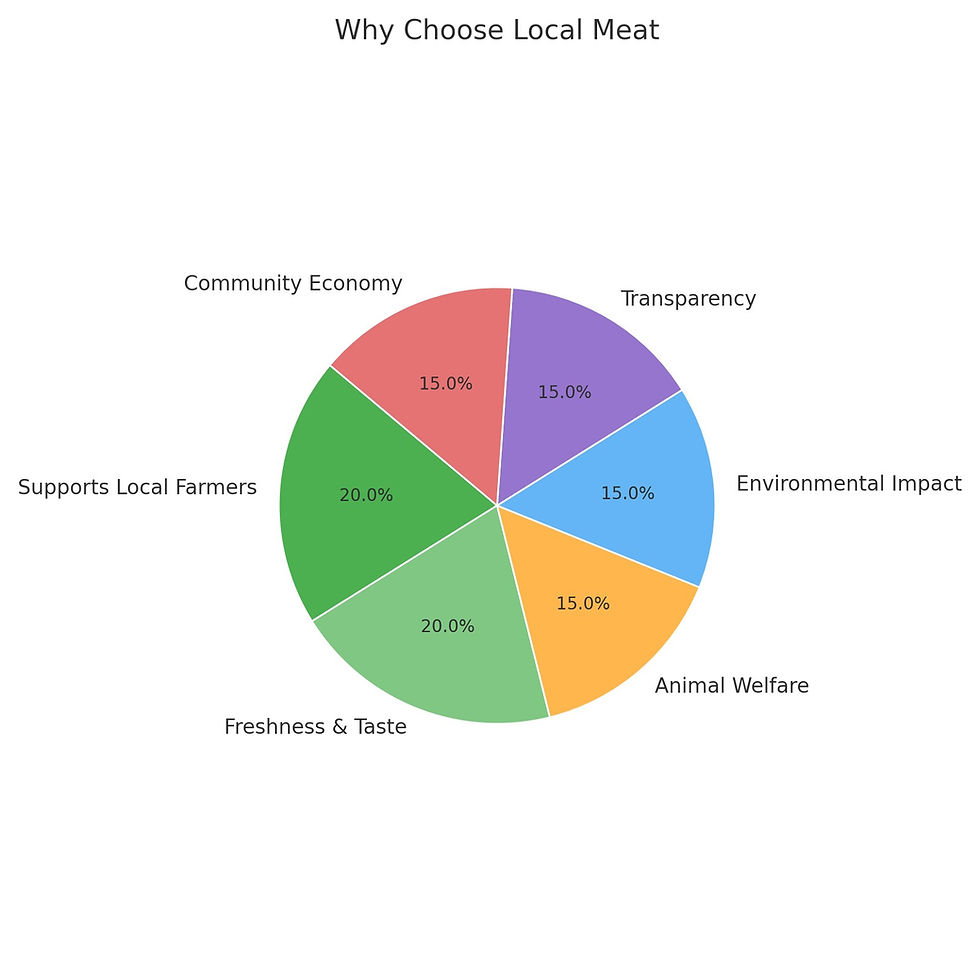
Farm-sourced meat is preferable for several reasons:
Nutrition: These meats are often fresher, meaning they retain more nutrients.
Taste: Sourced from local farmers, these meats often boast richer flavors.
Sustainability: Supporting local farms typically means a reduced carbon footprint and better environmental practices.
The Farming Process
The journey of meat begins at the farm. The first step in the process is breeding and raising livestock with care. Farmers often choose specific breeds prized for their meat quality, such as Angus for beef.

Farmers adhere to strict practices to ensure the animals are healthy and comfortable. This includes:
Providing a balanced diet tailored to the animals’ needs.
Ensuring ample living space that allows for natural behaviors.
Implementing strong veterinary care and preventive medicine programs.
Diverse grazing patterns, especially in grass-fed systems, further enhance the flavor and nutritional profile of the meat. Many farmers adopt rotational grazing, which allows pastureland to recover while ensuring livestock accesses fresh grass.
The Processing Stage
Once animals are raised, the next step is processing. This stage is critical, as it must comply with industry standards to guarantee meat safety and quality.
Processing facilities follow rigorous guidelines set forth by government agencies to ensure:
Cleanliness during the slaughter.
Proper handling of the meat post-slaughter.
Necessary inspections to maintain health standards.
Farm-sourced meat often has shorter processing times, which reduces stress for the animals and retains quality. Many local processors also prioritize humane treatment, resulting in a product that reflects the care taken throughout the farming and processing stages.

Farmers sometimes even partner with local butchers to directly market their products. This relationship not only supports the local economy but also offers consumers direct access to high-quality meat that they can feel good about purchasing.
Distribution and Local Markets
Once meat is processed, it embarks on the journey to local markets, grocery stores, and restaurants. Local distribution channels often use shorter routes that minimize delays, ensuring the meat is as fresh as possible when it arrives at your table.
Buying farm-sourced meat at local farmers’ markets or stores can mean knowing exactly where your food comes from. Many vendors provide cards or brochures detailing the farm’s practices and stories, which can help you connect with your food on a deeper level.
Meal Preparation and Cooking
At this point, you've selected your farm-sourced meat from a local market, and now it's time to prepare it. Knowing that your meat has traveled a relatively short distance from farm to table can enhance your cooking experience. You might even discover that these meats cook differently due to their quality.
For instance, when preparing beef, consider:
Cooking times: Grass-fed beef typically requires shorter cooking times due to its lower fat content.
Seasoning simplicity: A light touch on spices can let the meat's natural flavors shine.
The end goal is to create a dish that is both delicious and nourishing.

Choosing the Right Farm-Sourced Meat
When selecting your meat, keep an eye out for:
Certifications of animal welfare.
Organic or grass-fed labels, ensuring that you are making choices that align with your values.
Asking questions about the farm’s or retailer's practices and sourcing—invested farmers and retailer's often love sharing their story.
Supporting Sustainable Practices
By choosing farm-sourced meat, you are not just making healthier choices for yourself; you are also supporting sustainable agricultural practices. Many local farms use methods aligned with sustainable farming principles, which can benefit both the community and the environment.
Supporting local farmers can lead to:
Preservation of local farms and the rural landscape.
Enhancement of local economies through direct support.
As a consumer, your choices can inspire farmers to maintain these sustainable practices.
Final Thoughts
Understanding the journey of farm-sourced meat from pasture to plate helps us connect with what we consume. By choosing local farm-sourced options, we are more than just customers—we become advocates for quality, sustainability, and ethical treatment of animals.
When you enjoy your next meat dish, take a moment to appreciate the effort and care that went into bringing it to your table. Each bite is a testament to the hard work of farmers who are committed to providing us with the best.
Embrace the journey, celebrate the flavor, and make informed choices at every meal.

Comments